
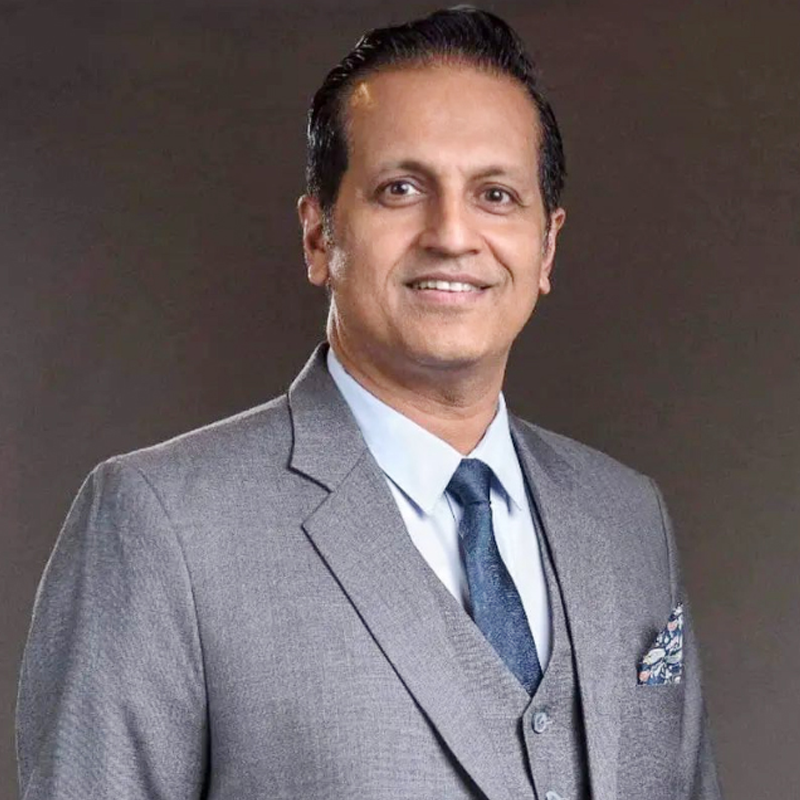


Ajit Menon— Director
Ajit was a CXO in over five Industries before he became an Author. Ajit is also a Philanthropist and a nation-builder and was recently listed in the National Icon list with several literary awards. Ajit Menon’s writing prowess has been acknowledged, with him being rated among the ‘ Top 5 inspiring writers of the year and his best-seller series “The Panthers Ghosts”, rated as one of India’s Top 15 must-read books. Ajit Menon also holds the influential position of Special Advisor to the Governor of West Bengal. In this role, he is dedicated to his vision of making West Bengal the literary hub of the world. Along with his co–author Anil Verma, Ajit plans to release four more books in the same series apart from other books they have already published.
Anil Verma— Director
Anil has been an advertising professional for three decades and has held strategic positions in TBWA, Rediffusion, Contract, Ogilvy, and Mudra, delivering award-winning TV commercials, jingles, and print Ads. His success extends beyond the advertising industry. He is a renowned Lyricist and screenwriter, with a notable debut in Bollywood as a lyricist for Ajay Devgan’s blockbuster films Tanhaji, the Unsung Warrior, The Big Bull, and BHUJ. His achievements in Bollywood are genuinely inspiring. All his songs have become super hits, and he was awarded the ‘Emerging Lyricist of 2023’ title. Anil co-authored ‘The Puppeteer’ – the second book in the bestseller series, ‘The Panther’s Ghosts’ with Ajit Menon, and it became #1 in the Political Thriller Category. He will be co-authoring four more books in the same series with Ajit Menon.
Kaushik — Composer, Singer, Music Producer
Profile Overview
Kaushik Das is one half of the composer-producer duo widely known for blending Indian classical tonalities with contemporary Bollywood soundscapes. Raised in Barrackpore, Kolkata, he was immersed early in a culturally dense artistic environment that shaped his sonic instincts.
Training and Musical Foundation
Kaushik’s artistic grammar is rooted in Hindustani classical discipline. He trained under Pandit Ajay Chakraborty, who provided him with a rigorous foundation in raga structure, melodic improvisation, and emotive phrasing. This classical base later became the signature emotional depth in his film compositions.
Career Trajectory
He moved to Mumbai in 2013 to pursue professional scoring opportunities. The early years were spent assisting and contributing creative input to established composers—an apprenticeship that sharpened his production sensibilities and studio workflow expertise. His breakthrough came when the duo composed “Tera Hoke Rahoon” for Behen Hogi Teri, sung by Arijit Singh. The song’s reception positioned him as a serious melodic craftsman in the industry.
Signature Strengths
- Deeply emotive melodic lines
- Strong classical phrasing inside commercial structures
- Ability to compose “hook-driven” romantic ballads
Notable Works
- “Sajan Bade Senti” — Badhaai Ho (National Award-winning film)
- “Mere Yaaraa” — Sooryavanshi
- “Dil” — Ek Villain Returns
Artistic Identity
Kaushik’s compositional philosophy revolves around emotional accessibility. Even when orchestrations are modern, his melodic spine tends to follow classical phrasing logic, making his music immediately hummable yet structurally refined.
Guddu — Composer, Singer, Music Producer
Profile Overview
Shubhadeep Mitra, professionally known as Guddu, is the complementary force in the duo’s sonic architecture. Also raised in Barrackpore, he developed a contrasting musical identity rooted in Western traditions, giving the partnership its stylistic duality.
Musical Orientation
Unlike Kaushik’s classical grounding, Guddu gravitated toward Western genres—blues, jazz, and rock. This exposed him early to harmony-driven composition, chord progressions, groove structures, and digital production techniques. His ear for arrangement and rhythm programming forms the modern backbone of their tracks.
Career Development
He moved to Mumbai in 2013, along with his cousin and collaborator. During their formative years, Guddu focused heavily on production design—sound layering, instrumentation balance, and studio engineering. This technical command helped the duo transition from assistants to independent composers.
Key Contributions to Their Sound
- Contemporary chord progressions and harmonic richness
- Hybrid orchestration (live + electronic)
- Hook-centric arrangement style suited for film soundtracks
Major Releases
- “Loveyatri Title Track” — LoveYatri
- Durga Puja anthems “Dugga Elo” and “Dugga Dugga”
- Bengali collaboration “Ebhabe Ke Dake” with Arijit Singh
Creative Persona
Guddu functions as the duo’s sonic architect. If Kaushik builds melody, Guddu builds atmosphere. His production aesthetic emphasises texture, rhythm, energy, and contemporary polish, ensuring his music resonates strongly with younger listeners on digital platforms.
Kaushik–Guddu | The Dual Engine of Emotion and Sound
When Kaushik Das and Shubhadeep Mitra enter a studio, it does not feel like two musicians beginning work. It feels like two forces are aligning.
They are not simply collaborators. They are a system.
Kaushik is melody instinct — intuitive, classically wired, emotionally surgical. He hears the soul of a song before the first instrument is touched. Guddu is sonic architecture — structural, atmospheric, technically precise. He builds the environment in which that soul can breathe. One thinks in ragas and emotional arcs. The other thinks in textures, harmonics, and spatial depth. Alone, each is formidable. Together, they function like a perfectly synchronised scoring engine designed for cinema.
Their origin story is rooted in contrast. Raised in Barrackpore’s culturally dense ecosystem, they absorbed two different musical universes. Kaushik is trained in the classical tradition, where every note has lineage. Guddu immersed himself in Western genres, where rhythm and harmony shape emotional velocity. Instead of clashing, these influences fused. The result is their defining sonic signature: tradition woven seamlessly into contemporary sound design.
In the industry, composers often choose between melody-driven music or production-driven music. This duo refuses that binary. Their tracks are engineered as emotional experiences. The listener does not just hear the song; they inhabit it. This is why their compositions thrive on visual platforms — reels, edits, montages. Their music carries cinematic scale even before it meets a screen.
Their workflow is almost mythic in rhythm. Kaushik sketches emotional DNA. Guddu translates it into sonic reality. Layers form. Space opens. Hooks crystallise. What begins as a melodic idea becomes an immersive soundscape calibrated for mass memory. By the time the final track plays, it feels less like it was created and more like it always existed.
That is their real distinction. Not popularity. Not chart numbers. Inevitability.
Because when Kaushik and Guddu compose, they do not chase impact.
They design it.

